Best Practices for Drive Coaches
October 15, 2025
FIRST® Robotics Competition program staff are always looking for ways to improve the overall experience for our teams and students, and part of that is testing new solutions. The TLDR of this blog is that we will be piloting a change for Head Referee Interaction rules for the 2026 season to make them more consistent with other volunteer interactions which ensure mentors have ability to support their student team members when needed.
We have said it before, and we want to say it again. Mentorship and coaching are important aspects of FIRST® programs. Adult mentorship is part of what makes FIRST so effective, and it’s been core to our programs from the very beginning. FIRST programs have impact because of the tens of thousands of caring adult volunteers (coaches, mentors, and event volunteers) that participate every season. Over the past several years, you can see a consistent pattern within our program:
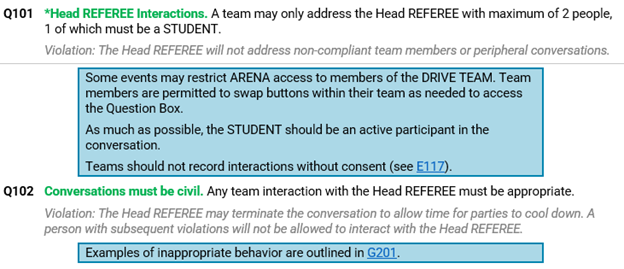
For the 2026 season, we will be allowing one additional person (maximum of 2) to interact with the Head Referee. This additional person may be an adult or another student. We will also be adding more clarity and guidance for our Head Referees for interactions with a team which might not be appropriate (for example if inappropriate language is used or if the Head Referee is being yelled at). If any of these instances occur, the Head Referee may disengage from the conversation after a warning. Below is a preview of the two applicable rules:
As an organization, FIRST and FIRST Robotics Competition have a responsibility to create a program structure which serves all teams and allows enough flexibility so each team can choose what’s best for their team members in any given situation.
In addition to the trainings and best practices shared above, this rule change is intended to be another tool in the mentoring toolbox. We trust mentors to help make decisions about how to best serve each of their students, which may involve the mentor going to the question box with them, or not.
The purpose of FIRST is to prepare the young people of today for the world of tomorrow. FIRST programs can be life-changing experiences that build skills, confidence, and resilience. Part of that skill development comes from risk taking (doing things that are hard and maybe scary!) and like many people, students are often more willing to take risks if they know they are in a safe and supportive environment. While teams can do many things to prepare their students (and mentors) for the rigors of competition before they attend, we don’t believe that our role is to force situations which isolate students from their team members in high stakes situations.
We think that some of the greatest mentoring can happen in moments where tension is highest, including right before, during, and after a match. As much as possible, we want the student to be an active participant in the conversations, and we hope that this change will allow adults an opportunity to help provide additional mentoring and feedback to students on these interactions just like we have seen with the Inspection Process and the Alliance Selection Process changes.
We will collect feedback following the season before deciding if we will continue to offer this option or if we need to make additional modifications for future seasons.